
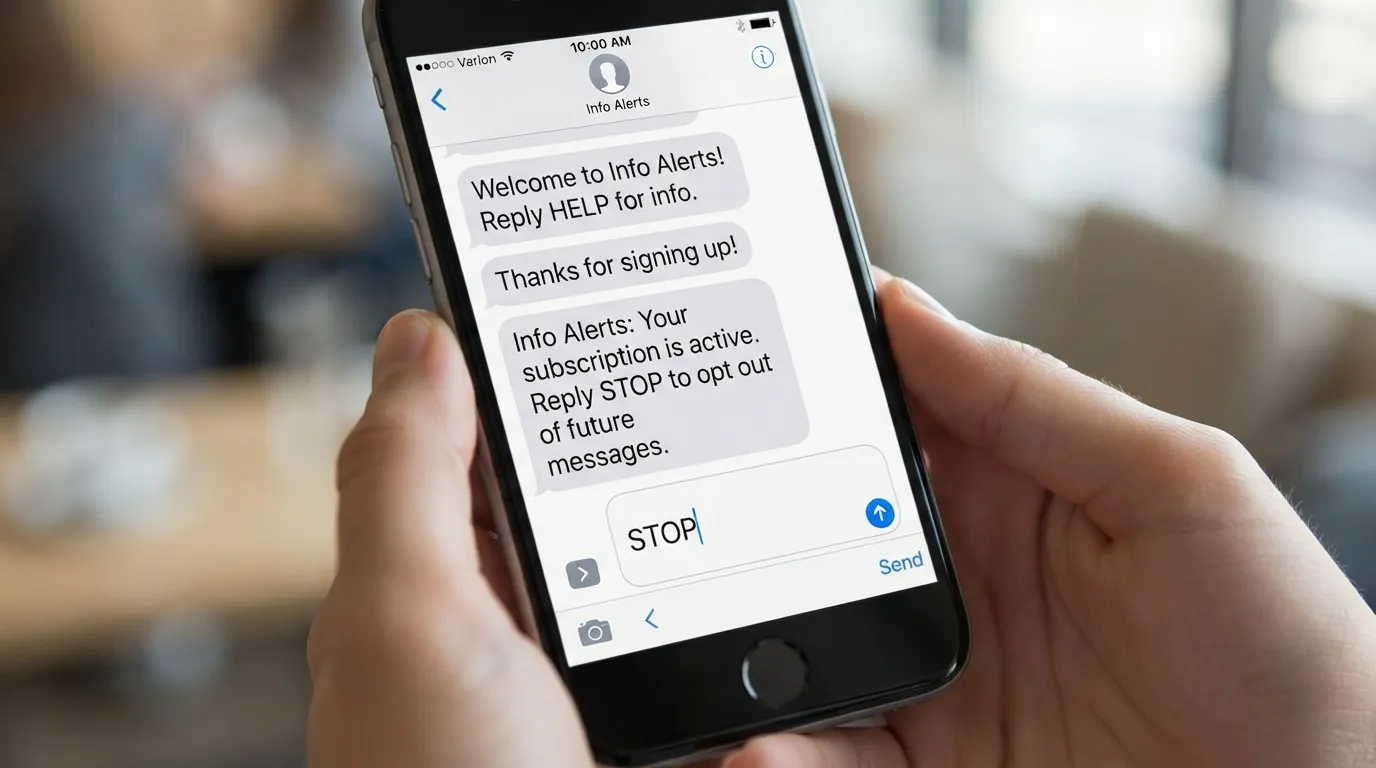
Opt out in text means choosing to stop receiving messages from a business or service you previously agreed to hear from, usually by replying with a keyword like STOP.
If you’ve gotten a text ending with “Reply STOP to opt out” and wondered what that actually does, you’re definitely not alone. It’s one of the most common phrases in business texting, and most people see it dozens of times without ever really thinking about it.
You’ll run into “opt out” most often in marketing texts, appointment reminders, and automated messages from stores, gyms, dentists, or subscription services. It’s the flip side of “opting in,” which is what happened when you first agreed to receive texts, often by checking a box online or texting a keyword yourself.
People search for this term because they want to actually stop unwanted texts without guessing whether it’ll work, or worry it might do something unexpected, like blocking a number they still want to hear from.
This guide explains exactly what opting out does, how to do it, and what to expect afterward.
Opt Out Meaning in Text
In text messaging, opt out means to unsubscribe or remove yourself from a text messaging service.
When you opt out, you’re telling the sender that you no longer want to receive future messages.
For example:
- “Reply STOP to opt out.”
- “Text STOP at any time to opt out.”
- “You can opt out of these alerts whenever you want.”
In each example, opt out simply means stop receiving messages.
Is “Opt Out” Slang or an Acronym?
No. Opt out is not internet slang, an acronym, or a texting abbreviation.
It’s a standard English phrase widely used by businesses, mobile carriers, banks, healthcare providers, schools, and online services.
Unlike abbreviations such as LOL or BRB, opt out has the same meaning in everyday English and text messaging.
What Does Opt Out Mean in Everyday Text Messages?
In everyday texting, opt out usually refers to unsubscribing from automated or recurring messages.
People may opt out of:
- Promotional offers
- Marketing campaigns
- Store discounts
- Appointment reminders
- News alerts
- Delivery notifications
- Subscription services
For example:
- “I opted out because I was getting too many messages.”
- “Just reply STOP to opt out.”
- “You can opt out anytime.”
The phrase gives users control over the messages they receive.
Where People See “Opt Out”
Unlike internet slang, opt out is mostly used by businesses and organizations rather than friends chatting with each other.
Opt Out in SMS Text Messages
SMS is the most common place you’ll see the phrase.
Examples include:
“Reply STOP to opt out.”
Or:
“Text STOP to unsubscribe from future messages.”
These instructions help users stop receiving automated texts.
Opt Out in WhatsApp Business Messages
Businesses using WhatsApp may allow customers to opt out of promotional updates or notifications.
For example:
“Reply STOP if you’d like to opt out of future offers.”
This gives customers an easy way to unsubscribe.
Opt Out in Marketing Texts
Retail stores, restaurants, and online businesses often include opt-out instructions in promotional messages.
Examples include:
“Get 20% off today! Reply STOP to opt out.”
Or:
“Weekly deals available. Opt out anytime.”
These messages comply with messaging regulations and respect customer preferences.
Opt Out in Appointment Reminders
Doctors, dentists, salons, and service providers often send appointment reminders by text.
A message may say:
“Reply STOP to opt out of future reminders.”
This allows patients or customers to stop receiving automated notifications.
Opt Out in Banking and Service Alerts
Banks and service providers may also offer the option to opt out of certain non-essential notifications.
Examples include:
“Reply STOP to opt out of promotional alerts.”
Important security or fraud alerts may still be sent even after marketing messages are disabled.
Why Is “Opt Out” Important?
The phrase opt out is important because it gives users control over their communication preferences.
Instead of continuing to receive unwanted promotional or automated texts, you can unsubscribe quickly by following the sender’s instructions—usually by replying with STOP, END, UNSUBSCRIBE, or another keyword specified in the message.
Understanding what opt out means helps you manage your inbox, reduce unwanted messages, and recognize legitimate subscription instructions in text messaging.
Real Chat Examples
Unlike abbreviations such as LOL or BRB, opt out is most commonly used in automated text messages from businesses and organizations. Here are 10 realistic examples showing how the phrase is used.
Example 1
Business: Thanks for joining our rewards program!
Work: You’ll receive weekly offers.
Business: Reply STOP to opt out.
Example 2
A: I keep getting promotional texts.
B: Just reply STOP to opt out.
A: Thanks, I’ll do that.
Example 3
Clinic: Your appointment is tomorrow at 10:00 AM.
Clinic: Reply STOP to opt out of reminders.
Patient: Okay, thanks.
Example 4
Store: Get 25% off your next purchase!
Store: Reply STOP to opt out.
Customer: I don’t need these anymore.
Example 5
A: Why does every company say “Reply STOP to opt out”?
B: It lets you unsubscribe from future messages.
A: That makes sense.
Example 6
Delivery Service: Your package will arrive today.
Delivery Service: Reply STOP to opt out of text updates.
Customer: Got it.
Example 7
Bank: New offers are available.
Bank: Reply STOP to opt out of promotional messages.
Customer: Thanks for the information.
Example 8
Gym: Your membership renewal is coming up.
Gym: Reply STOP to opt out of reminders.
Member: I’ll keep receiving them for now.
Example 9
A: I don’t want these marketing texts anymore.
B: You can opt out anytime by following the instructions in the message.
A: I’ll do that now.
Example 10
Restaurant: Weekly specials are here!
Restaurant: Reply STOP to opt out.
Customer: Thanks, but I’ll stay subscribed.
How to Reply When Someone Says “Opt Out”
If someone tells you to opt out, they’re usually explaining how to stop receiving messages. Here are some natural responses.
Casual Replies
- “Okay, thanks!”
- “I’ll do that.”
- “Got it.”
- “That helps.”
Friendly Replies
- “Thanks for letting me know.”
- “I appreciate the tip.”
- “I’ll unsubscribe if I don’t need the messages.”
- “Good to know!”
Neutral Replies
- “Understood.”
- “Noted.”
- “I’ll follow the instructions.”
- “Thanks.”
If You Want to Stop Messages
You can simply reply with the keyword requested, such as:
- “STOP”
- “END”
- “UNSUBSCRIBE”
Only use the keyword if you actually want to stop receiving future texts.
Is “Opt Out” Rude or Offensive?
No. “Opt out” is not rude or offensive.
It’s a standard phrase used by businesses and organizations to give people control over their communication preferences.
You’ll commonly see it in:
- Marketing text messages
- Appointment reminders
- Delivery updates
- Loyalty programs
- Promotional campaigns
- Business notifications
Choosing to opt out is completely normal and doesn’t affect your ability to make future purchases or use most services.
Who Uses This Term?
The phrase opt out is commonly used by:
- Retail stores
- Banks
- Healthcare providers
- Airlines
- Restaurants
- Schools
- Mobile service providers
- Online businesses
You’ll most often see it in:
- SMS text messages
- Business messaging platforms
- Marketing campaigns
- Customer support texts
- Appointment reminders
- Delivery notifications
Unlike internet slang, opt out is used by businesses rather than individual social media users.
Origin of the Term
The phrase opt out comes from traditional marketing and legal language, where customers are given the choice to stop receiving communications or participating in a service.
As email marketing and mobile messaging became more common, opt out became a standard term for unsubscribing from promotional messages.
Today, it’s widely used in SMS marketing, email newsletters, mobile apps, and other communication services to give users an easy way to stop receiving unwanted notifications.
Comparison Table
| Term | Meaning | Type | Usage | Popularity |
| Opt Out | Unsubscribe from future messages | Standard English Phrase | Stopping marketing or automated texts | Very High |
| IDK | I Don’t Know | Acronym | Expressing uncertainty | Very High |
| IDC | I Don’t Care | Acronym | Showing indifference | High |
| IMO | In My Opinion | Acronym | Sharing a personal opinion | High |
| BRB | Be Right Back | Acronym | Letting someone know you’ll return soon | Very High |
Real-World Usage Example
Imagine you sign up for a clothing store’s rewards program. A few days later, you receive this text:
Store: “Get 20% off your next order! Reply STOP to opt out.”
If you enjoy receiving discounts, you can simply ignore the opt-out instruction and stay subscribed.
However, if you no longer want promotional messages, you reply:
You: “STOP”
A few moments later, you receive a confirmation message:
Store: “You have successfully opted out and will no longer receive promotional texts.”
In another situation, your doctor’s office sends appointment reminders:
Clinic: “Reply STOP to opt out of future reminder messages.”
If you still want appointment reminders, you don’t need to do anything. If you prefer not to receive them, you can follow the opt-out instructions.
These examples show that opt out simply means choosing to stop receiving future text messages or notifications from a sender.
FAQs
What does opt out mean in text messages?
In text messages, opt out means to unsubscribe from future messages. Most businesses allow you to opt out by replying with keywords like STOP, END, or UNSUBSCRIBE.
What does “Reply STOP to opt out” mean?
It means you can stop receiving future promotional or automated text messages by replying STOP. After doing so, you’ll usually receive a confirmation that your request has been processed.
Is “opt out” slang?
No. Opt out is not slang, an acronym, or a texting abbreviation. It’s a standard English phrase commonly used in SMS marketing, customer notifications, and subscription services.
Is it safe to opt out of text messages?
Yes. It’s generally safe to opt out of legitimate business text messages that you previously subscribed to. However, avoid replying to suspicious or unexpected messages from unknown senders, as they may be spam.
How do you opt out of text messages?
In most cases, simply follow the instructions in the message. Common keywords include:
- STOP
- END
- UNSUBSCRIBE
- CANCEL
The exact keyword depends on the sender’s instructions.
Conclusion
Opt out is a common phrase used in text messaging that means to unsubscribe or stop receiving future messages from a business, organization, or service. You’ll often see it in promotional texts, appointment reminders, delivery updates, and other automated notifications.
Unlike internet slang, opt out is a standard term used to give people control over their communication preferences. If you no longer want a company’s text messages, following the opt-out instructions is usually the quickest way to unsubscribe.
Understanding what opt out means helps you manage your subscriptions, reduce unwanted messages, and make informed decisions about the texts you receive.